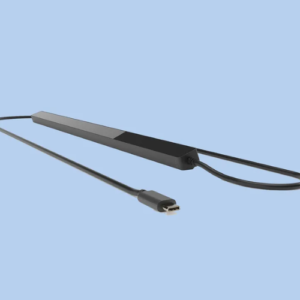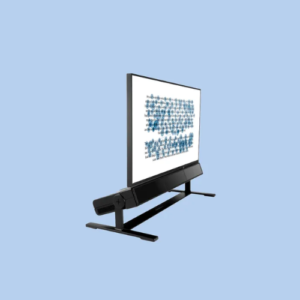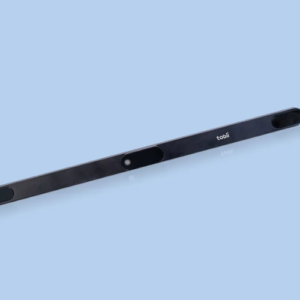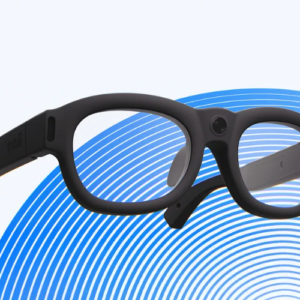


The Tobii Pro Glasses 3 is a professional wearable eye-tracking platform designed for researchers who need to measure visual attention and behavior in real-world environments rather than controlled laboratory settings.
What it does
The system records exactly where a participant is looking while they move naturally through their environment. It combines:
- High-precision eye tracking
- A scene camera that records the participant’s field of view
- Real-time gaze overlay
- Research-grade data collection and analysis
This allows researchers to understand:
- What people notice first
- What they ignore
- How long they look at objects
- How attention changes during tasks and decision-making
Key Features
Wearable Design
The glasses are lightweight and unobtrusive, allowing participants to:
- Walk freely
- Drive (where permitted and safe)
- Shop
- Work
- Interact socially
- Perform real-world tasks
Research-Grade Accuracy
Tobii specifies scientific-grade eye-tracking precision suitable for:
- Academic research
- Human factors studies
- UX testing
- Market research
- Industrial ergonomics
Real-Time Data Collection
Researchers can:
- Monitor recordings live
- Review gaze behavior immediately
- Synchronize eye-tracking data with other research systems
Natural Environment Studies
Unlike screen-based eye trackers, Glasses 3 can be used in:
- Retail stores
- Hospitals
- Factories
- Vehicles
- Airports
- Classrooms
- Sports environments
Typical Research Applications
| Field | Example Use |
|---|---|
| UX Research | Understanding how users interact with products and interfaces |
| Retail & Shopper Research | Tracking what attracts attention on shelves |
| Human Factors | Studying operator attention in complex environments |
| Healthcare | Examining clinician workflows and decision-making |
| Education | Understanding learning behaviors |
| Sports Science | Analyzing athlete visual strategies |
| Automotive | Driver attention and situational awareness studies |
Main Components


A typical Tobii Pro Glasses 3 setup includes:
- Eye-tracking glasses – worn by the participant.
- Scene camera – captures the participant’s view.
- Recording unit – stores data and handles processing.
- Analysis software – used to visualize gaze paths, heat maps, fixation data, and attention metrics.
Data Outputs
Researchers commonly obtain:
- Gaze plots
- Heat maps
- Fixation duration
- Saccade metrics
- Areas of Interest (AOI) analysis
- Time-to-first-fixation
- Attention distribution statistics
Who Uses It?
Organizations that commonly deploy wearable eye tracking include:
- Universities
- Research institutes
- Automotive manufacturers
- Medical schools
- Consumer goods companies
- Government research laboratories
- UX and human-factors consultancies
Compared with traditional desktop eye trackers, Tobii Pro Glasses 3 excels when the goal is to study human behavior in natural, unrestricted environments where mobility and ecological validity are critical.