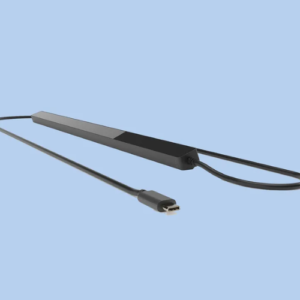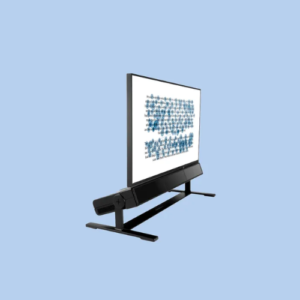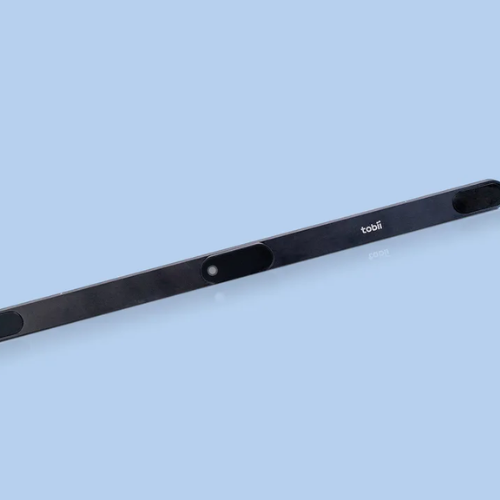


The Tobii Pro Spark is Tobii’s entry-level research eye tracker, designed to make eye-tracking research accessible to students, educators, UX professionals, and researchers who are new to the field.
While the Tobii Pro Fusion and Tobii Pro Spectrum target more advanced research needs, Spark focuses on affordability, ease of use, and reliable fixation-based data collection.
Key Features
60 Hz Sampling Rate
Spark records eye movements at 60 Hz (60 samples per second).
This is well suited for:
- Fixation analysis
- Visual attention studies
- Basic gaze-path analysis
- Areas of Interest (AOI) research
- Educational research
- User experience testing
For many studies focused on where participants look and for how long, 60 Hz provides sufficient data quality.
Easy Setup
The system is designed for quick deployment:
- Minimal hardware complexity
- Fast calibration
- Portable form factor
- Simple integration into research workflows
This makes it especially attractive for universities and teaching laboratories.
Reliable Across Diverse Participants
Tobii emphasizes robustness across:
- Different age groups
- Different ethnicities
- Users wearing glasses
- Users wearing contact lenses
The system is designed to maintain tracking quality while allowing natural participant behavior.
Portable Design
Because of its compact size, Spark can easily be used in:
- Classrooms
- Small research labs
- Field research setups
- UX testing rooms
- Temporary study environments
Research Applications Psychology
Suitable for:
- Attention studies
- Visual search tasks
- Learning experiments
- Basic cognitive research
Education
Researchers can examine:
- Reading behavior
- Student engagement
- Learning materials
- Educational software
UX and Usability Testing
Useful for understanding:
- Website navigation
- App usability
- Product interfaces
- User attention patterns
Marketing and Consumer Research
Can help identify:
- Advertisement effectiveness
- Package design visibility
- Consumer attention hotspots
What Spark Measures Best Excellent For
✅ Fixation duration
✅ Areas of Interest (AOI)
✅ Heat maps
✅ Gaze plots
✅ Visual attention studies
✅ Reading and usability research
Less Suitable For
⚠️ Detailed saccade analysis
⚠️ Micro-saccade research
⚠️ High-speed eye movement studies
⚠️ Advanced neuroscience applications
These use cases typically benefit from higher sampling rates such as those offered by Fusion or Spectrum.
Comparison Across Tobii Screen-Based Eye Trackers
| Product | Sampling Rate | Position |
|---|---|---|
| Tobii Pro Spark | 60 Hz | Entry-level |
| Tobii Pro Fusion | Up to 250 Hz | Mid-range |
| Tobii Pro Spectrum | Up to 1200 Hz | Flagship |
Which One Should You Choose?
Spark
Best for:
- First-time eye-tracking users
- Student projects
- Teaching laboratories
- UX testing
- Fixation-based research
- Budget-conscious research groups
Fusion
Best for:
- Broader academic research
- Saccade analysis
- More demanding experimental designs
- Multi-purpose research programs
Spectrum
Best for:
- Neuroscience
- Micro-saccade studies
- Advanced cognitive science
- High-speed eye-movement research
Position in Tobii’s Portfolio


A simple way to think about the lineup:
- Tobii Pro Spark → Entry point into eye tracking (60 Hz).
- Tobii Pro Fusion → General-purpose research platform (250 Hz).
- Tobii Pro Spectrum → Maximum scientific performance (up to 1200 Hz).
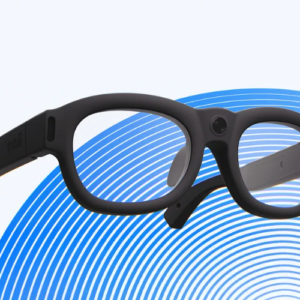
- Tobii Pro Glasses 3 → Research in real-world environments.
- Tobii Glasses X → Accessible wearable eye tracking for training, UX, and operational insights.
For researchers primarily interested in where people look, what captures attention, and how users interact with screens, Tobii Pro Spark provides one of the most accessible and cost-effective entry points into professional eye-tracking research.