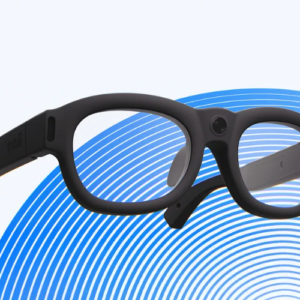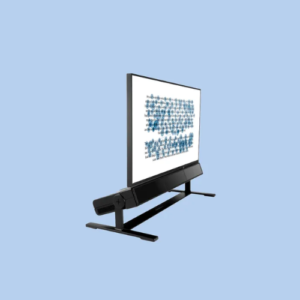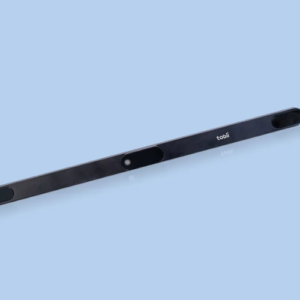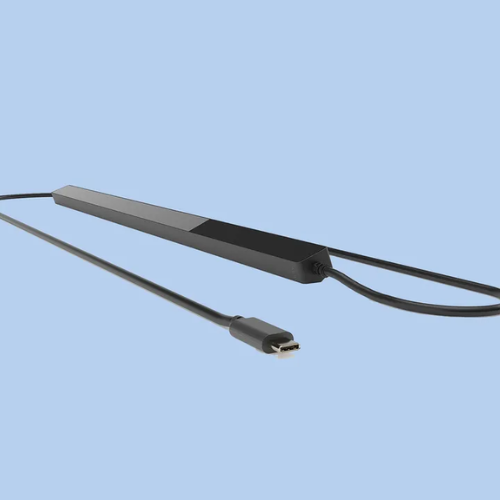


The Tobii Pro Fusion is Tobii’s mid-range research eye tracker, positioned between entry-level research systems and the flagship Tobii Pro Spectrum.
Designed for flexibility, Fusion provides a balance of performance, usability, and portability, making it suitable for a wide variety of research environments both inside and outside traditional laboratories.
Key Features
250 Hz Sampling Rate
Fusion captures gaze data at up to 250 Hz (250 samples per second), enabling researchers to study:
- Visual attention
- Fixations
- Saccades
- Reading behavior
- Decision-making processes
- Human-computer interaction
This sampling rate is sufficient for most academic and applied eye-tracking studies while requiring less specialized infrastructure than ultra-high-speed systems.
Flexible Research Deployment
Unlike many laboratory-only eye trackers, Fusion is designed to work in:
- Research laboratories
- Classrooms
- Clinical settings
- User-testing environments
- Mobile research setups
- Corporate research facilities
Robust Participant Tracking
The system is designed to accommodate a wide range of participants, helping researchers collect reliable data across diverse study populations.
Research Applications
Psychology
Common uses include:
- Attention studies
- Cognitive workload assessment
- Memory research
- Decision-making experiments
User Experience (UX)
Researchers can investigate:
- Website usability
- Software interfaces
- Product interactions
- Customer journeys
Education Research
Fusion can help analyze:
- Learning behaviors
- Reading patterns
- Instructional materials
- Student engagement
Human Factors
Useful for evaluating:
- Dashboards
- Control systems
- Safety-critical interfaces
- Workplace ergonomics
Strengths
Balanced Performance
Fusion offers a strong compromise between affordability and scientific capability.
| Capability | Benefit |
|---|---|
| 250 Hz sampling | Supports both fixation and saccade studies |
| Portable setup | Easier deployment outside dedicated labs |
| Screen-based tracking | Controlled experimental conditions |
| Research-grade data | Suitable for publication-quality studies |
Suitable for Most Eye-Tracking Research
Many common eye-tracking methodologies rely primarily on:
- Fixation duration
- Gaze transitions
- Areas of Interest (AOI)
- Scan paths
- Visual attention metrics
Fusion handles these tasks very effectively.
Comparison Within the Tobii Research Portfolio
| Product | Type | Sampling Rate | Best For |
|---|---|---|---|
| Tobii Glasses X | Wearable | Mobility-focused | Training, UX, operational insights |
| Tobii Pro Glasses 3 | Wearable | Research-grade | Real-world behavioral studies |
| Tobii Pro Fusion | Screen-based | Up to 250 Hz | General scientific research |
| Tobii Pro Spectrum | Screen-based | Up to 1200 Hz | Advanced eye-movement research |
Fusion vs Spectrum
Choose Fusion if you need:
- Broad research versatility
- Portable deployment
- Strong fixation and saccade analysis
- Lower system complexity
- Cost-effective research capability
Choose Spectrum if you need:
- Ultra-high temporal precision
- Micro-saccade analysis
- High-end neuroscience studies
- Millisecond-level eye movement measurement
Typical Users


Fusion is commonly used by:
- Universities
- Psychology departments
- Human-computer interaction labs
- UX research teams
- Healthcare researchers
- Educational researchers
- Corporate innovation groups
In Tobii’s lineup, Pro Fusion is often considered the “general-purpose research workhorse”—powerful enough for most fixation- and saccade-based studies while remaining flexible enough to be deployed beyond a dedicated eye-tracking laboratory.